
Guidelines To Selecting The Best IVF Method For Optimal Fertility Treatment Outcomes
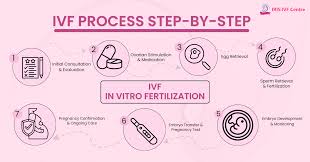
Intrauterine insemination (IUI) and In vitro fertilisation (IVF) are different methods of assisted reproductive technology(ART) utilised to help women conceive when they face difficulties achieving pregnancy naturally.
During IUI, sperm is injected directly into her uterus. IVF is a multi-step reproductive technology that involves egg stimulation, retrieval, lab fertilisation, and transfer.
Intrauterine insemination (IUI) is a fertility treatment that involves directly inserting sperm into a woman’s womb. Intrauterine insemination – a type of artificial insemination – is a procedure for treating infertility. Sperm that have been washed and concentrated are placed directly in your uterus around the time your ovary releases one or more eggs to be fertilised.
Importance of intrauterine insemination
Intrauterine Insemination (IUI) is a fertility treatment that involves placing sperm inside a woman’s uterus to facilitate fertilisation. The goal of IUI is to increase the number of sperm that reach the fallopian tubes and subsequently increase the chance of fertilisation.
Artificial insemination (AI) also known as intra uterine IUI, is used to treat women who have normal and healthy fallopian tubes, but for unknown reasons cannot conceive. This may be due to mechanical difficulties with intercourse – for example, a man is not able to achieve an erection or has structural problems with the penis after trauma or surgery. Artificial in semination (AI) may also be used when semen has been frozen due to a male partner’s absence or prior to cancer treatment.
The process of AI involves the insertion of a male partner’s semen through the female’s cervix and into the uterus at or just before the time of ovulation. AI can be performed during a natural menstrual cycle, or in combination with ovulation induction if the woman has irregular menstrual cycles. If a pregnancy is not achieved after a few AI attempts, the use of IVF or ICSI may be discussed.
You may be offered IUI if you are unable to have vaginal sex, for example, because of a physical dis ability or psychosexual problem
If you have a condition that means you need specific help to conceive. For example, if a couple has HIV and it is not safe to have unprotected sex.
Number of Sperm needed for IUI
After washing, there should be at least five million motile sperm for the IUI to be successful. After washing, samples containing one to five million motile cells had considerably reduced success rates.
Is intrauterine insemination a painful procedure?
IUI is minimally invasive, and patients do not even require pain medication or anesthesia during treatment. Patients may experience a slight pinching experience (similar to that experienced during a routine pap smear) and a little cramping as the catheter is passed through the cervix.
What duration does it take sperm to reach the egg after IUI?
Once the sperm enters the reproductive system, it can take about 30 to 45 minutes to reach the egg. For this, it is important to have a healthy sperm that has the right kind of motility to reach the egg and fertilise it. Once inside the body of a woman, healthy sperm can live up to two to five days.
Preparing for intrauterine insemination
Do not ejaculate for at least three days prior. The healthier sperm are available to meet the egg, the higher your chances of IUI success. If your partner is submitting his sperm sample, it is recommended to avoid ejaculation for at least three days – but no more than five days – before the sample day.
Dr Taiwo Orebamjo is an ex perienced Consultant Obstetri cian and a medical administra tion expert from the Kingston Academy of Learning and Career College Canada. He is a post-graduate of the Royal College of Obstetricians and Gynaecologists, London. The Research Fellow in assisted conception at the St. George’s Teaching Hospital in Tooting London is also the Consultant Obstetrician &Gynaecologist, Medical Director, at Parklande Specialist Hospital & Lifeshore Fertility and IVF Clinic.